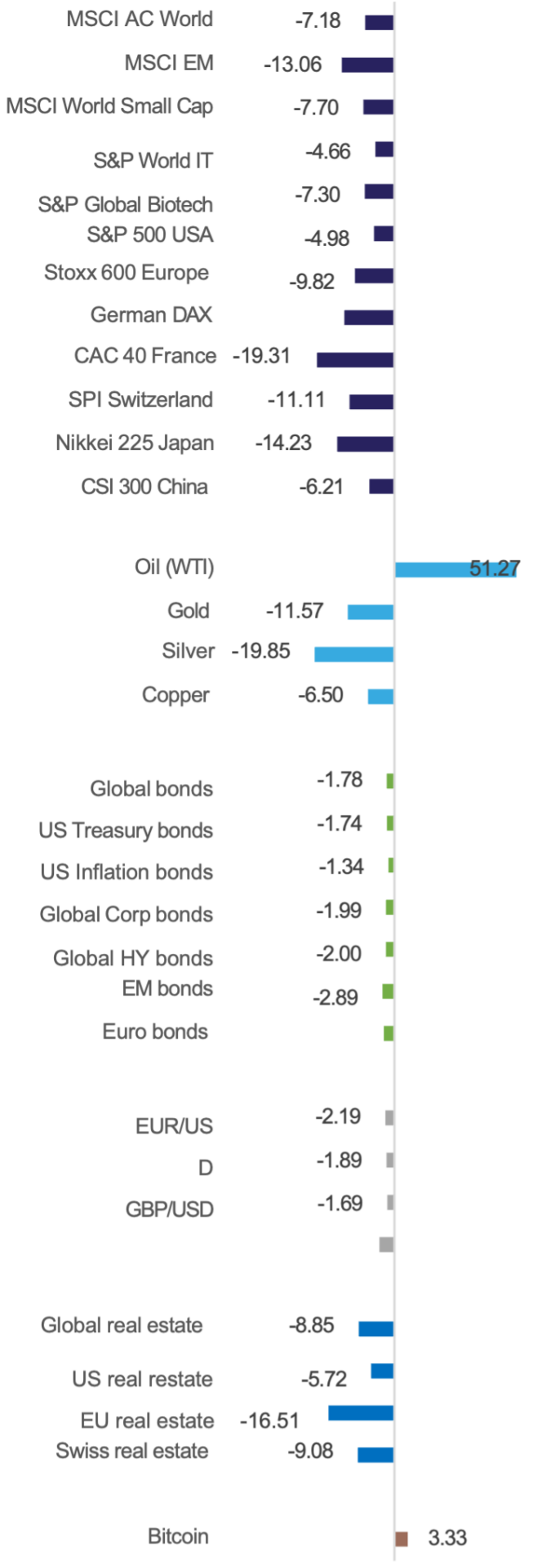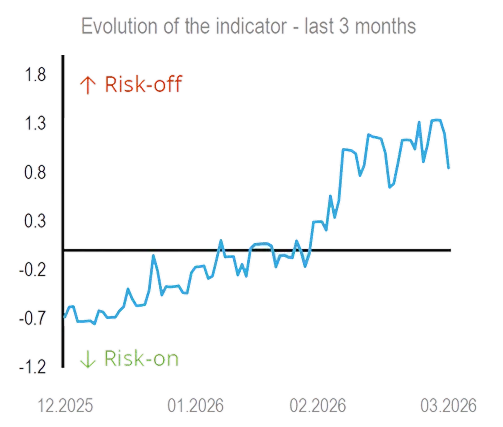



March has been a challenging month for financial markets. Most asset classes declined, with the exceptions of energy prices and the US dollar. After two strong opening months, March pushed most financial indices into negative territory for 2026.
The ongoing conflict in the Middle East, including damage to key energy infrastructure and the closure of the Strait of Hormuz, has driven oil and natural gas prices to levels not seen since the onset of the war in Ukraine. As the confrontation has evolved from a short military operation into a prolonged conflict, investors are reassessing the economic consequences of persistently higher energy costs. Inflation expectations are rising, with some economists now projecting that US headline inflation could approach 4%. Consequently, market participants have adjusted their expectations for monetary policy — shifting from rate cuts to the potential for further tightening.
As is typical with supply-driven shocks, the effect on global growth is likely to be negative, a risk that should not be underestimated. Financial markets are currently in a first-stage adjustment phase, incorporating heightened uncertainty regarding the duration of the war and its broader macroeconomic impact. Yields are rising, credit spreads widening, and implied volatilities increasing. Investors are taking profits on gold — and, to a lesser extent, equities — while holding higher levels of cash until clearer trends emerge. Supported by a stronger US dollar, US equities continue to outperform global peers. The technology sector, having underperformed over the past six months, has shown relative resilience since the conflict began. Bitcoin has similarly advanced by about 4% in March. Once again, the pattern of “sell first, ask questions later” has weighed most heavily on the most crowded positions.
As in 2022, albeit on a smaller scale, both bonds and equities have corrected simultaneously. The combination of rising inflation risks and slowing growth has pressured both asset classes, resulting in negative returns for many multi-asset portfolios. Building resilient portfolios capable of delivering sustained performance while limiting drawdowns remains a complex challenge. In March, short-term, high-quality fixed income and timely equity index put options helped cushion losses but did not offset declines in equities, credit, and gold. Some managed futures and alternative strategies delivered positive performance, though manager selection remains critical to success.
History suggests that investors should avoid overreacting in periods of market stress. Conversely, long-term investors often find opportunities as sentiment reaches extreme pessimism. Looking ahead, we continue to see renewed long-term potential in alternative energy and electrification themes, while high-yield bonds appear attractive given the higher yield.