


August was not only another very warm summer month; it was also rich in developments. First, we saw confirmation of exceptional earnings and revenue growth in the USA, supporting further equity gains. Second, the war in Iran shows no signs of easing, oil prices remain elevated, inflation fears have resurfaced, global uncertainty has increased, and gold and bitcoin have become more attractive. Finally, and not least, higher long-term interest rates have caught investors’ attention.
The successive heat waves we have experienced since June, with record-breaking temperatures, led us to prefer the cooler air of the Alpine mountain range. Reaching for the highs is precisely what financial markets did in August, with the S&P 500 touching 7,789 points mid-month. Equity markets reacted positively to reassuring inflation data at 3.4%, despite higher oil and gasoline prices, as the probability of Fed rate hikes declined.
The second-quarter earnings season also supported the positive sentiment, with earnings growth reaching an extraordinary 50% year on year, following 30% in the first quarter. The technology and energy sectors posted the highest year-on-year earnings growth, while healthcare surprised most with better-than-expected figures. Expected earnings growth for the third and fourth quarters remains at very high levels of 29% and 27%, respectively, before mechanically slowing in 2027. If these expectations are met, such a streak of strong earnings growth would be quite unusual outside an economic recovery phase. Like mountaineers in the Alps during a heatwave, it feels good to be at such highs, but as the heat persists the terrain becomes less stable and rocks may give way. High expectations are easier to disappoint, and even marginal bad news could hurt sentiment. Nevertheless, we maintain our preference for equities over bonds, as positive factors outweigh negative ones.
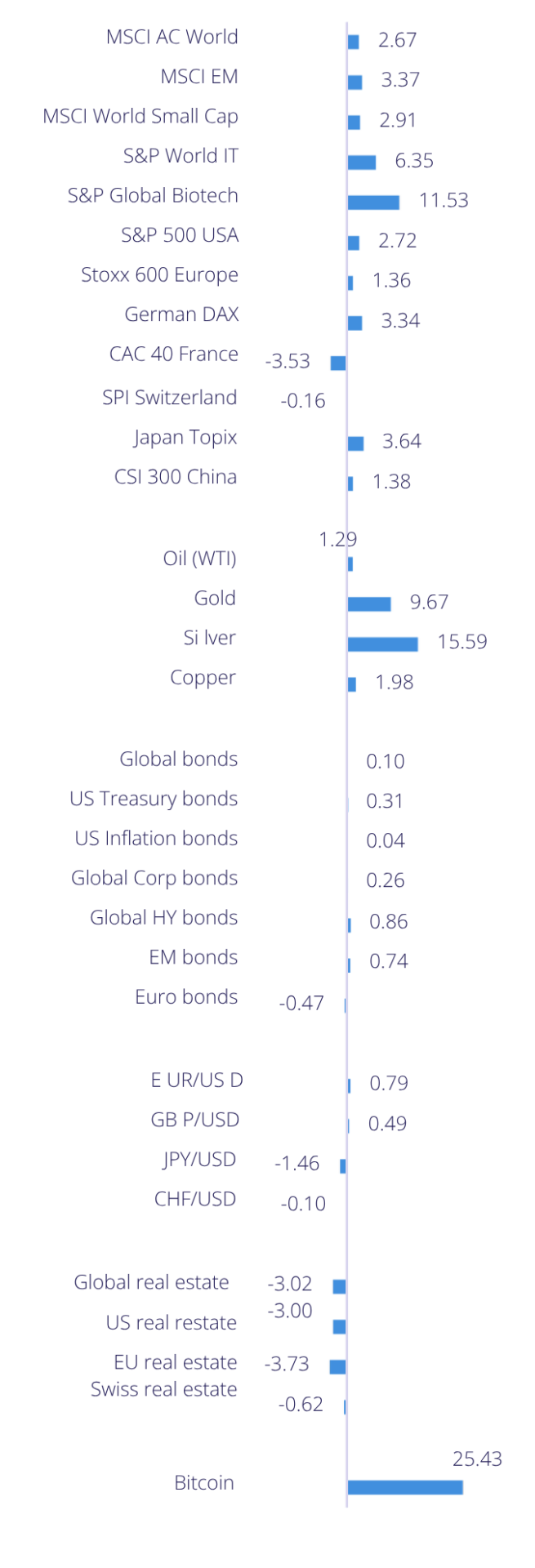
After a prolonged decline from the February highs, gold prices found stability over the summer around $4,000/oz before rebounding in August by nearly 10%. A weaker US dollar and higher near-term inflation expectations supported the rebound in precious metals. This nascent enthusiasm was, however, tempered after the Jackson Hole economic symposium, where Fed Chair Kevin Warsh made clearer his commitment to fighting inflation.
The other neglected asset, bitcoin, rebounded strongly in August as President Trump vocally supported the Clarity Act, a comprehensive cryptocurrency market-structure bill. Bitcoin ETFs recorded fresh inflows, signalling that institutional buyers were returning, while the sudden rebound forced some traders to unwind their short positions. It remains to be seen whether this technical relief has legs, but we have sympathy for growth assets that have been overlooked for some time.
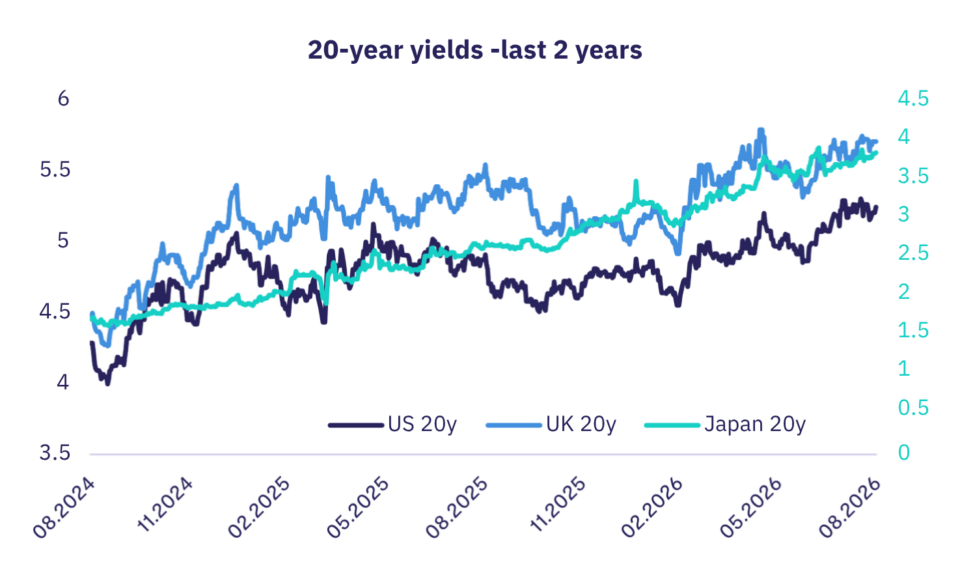
Finally, the market attention has switched to long-term interest rates that keep on climbing in most of developed markets. The 30-year US Treasury rate reached 5.30%, the highest level since 2007. We stay short duration.