
April 2026

Equities rebounded strongly

Download as pdf

1

Equities rebounded strongly and reached new all-time highs during the month.

2

Headline inflation is increasing, but major central banks kept their policy rates unchanged in April.

3

Q1 earnings season is surprising positively with strong sales and earnings growth.

4

Oil has reached its highest price since the conflict started. The Strait of Hormuz remains closed (at the time of writing).

Authored by Gilles Prince
Chief Investment Officer

Experts in what we do

Last month

Had we been told on April 1st that equities would deliver a 10% return over the month, the proposition would have sounded like an April fool’s joke. This would have been particularly so given persistent geopolitical tensions in the Middle East and a progressively uncertain macroeconomic backdrop. Nevertheless, financial markets posted strong and broad-based gains in April, led by Emerging Markets, Japan, and the technology sector.

The 10% rebound in US equities (S&P 500), which lifted the index above its January 2026 all-time highs, has been notable, if not perplexing. Within a span of three weeks, the market shifted from oversold to overbought conditions. Investor sentiment moved rapidly from extreme pessimism to marked optimism, and the VIX declined to more normalized levels around 18%.

Consistent with recent previous episodes of financial stress, markets entered a sustained upward trajectory once peak fear subsided. The announcement and subsequent extensions of a ceasefire, alongside prospects of peace negotiations, enabled investors to refocus on corporate fundamentals. With approximately 60% of companies of the S&P 500 index having reported, earnings growth stands at a robust 30%. Performance has been particularly strong among large-cap constituents, notably within the Technology and Communication sectors, suggesting a renewed confidence in the AI theme. Meanwhile, economic activity has remained resilient despite elevated oil prices: PMIs continue to signal expansion, US GDP growth reached 2.0% quarter-on-quarter in Q1, and major central banks have maintained stable policy rates.

That said, current market optimism appears to understate the potential macroeconomic impact of the ongoing energy shock. Both headline and core inflation are likely to rise further in the coming months, while growth is expected to decelerate. Importantly, the disruption extends beyond energy markets. Constraints and rising costs in inputs such as helium, urea, and sulphuric acid are affecting global supply chains. Agricultural output is likely to be adversely impacted due to higher fertilizer prices during the planting season, implying upward pressure on food prices. In energy markets, early signs of strain are visible through localized gasoline rationing, sharply higher airfares, and flight cancellations.

The duration of the closure of the Strait of Hormuz remains the key variable. The longer the disruption persists, the more pronounced the impact on global demand and economic activity. Current consensus, including IMF projections, already reflects weaker growth expectations. Risks remain skewed to the upside for inflation and to the downside for growth. While maintaining exposure to the upward trajectory of equity markets, we must recognize that the energy crisis—widely deemed unprecedented by experts—may entail significant economic repercussions that appear insufficiently priced in.
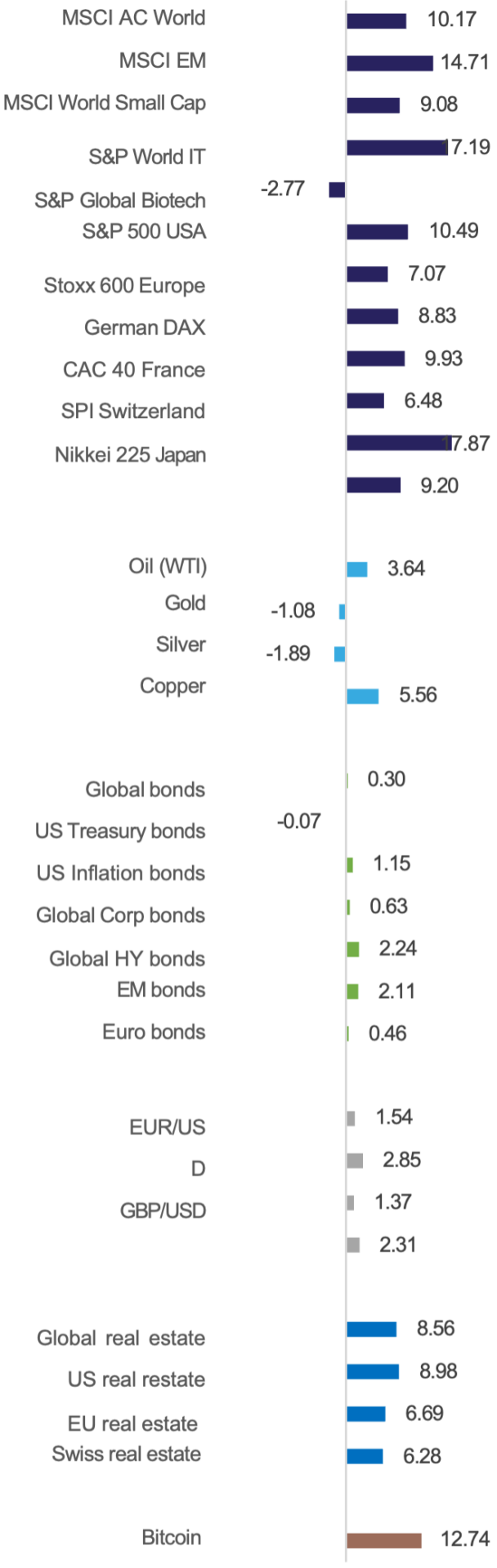
Scorecard

(In %, USD)

Monthly performances

Experts in what we do

The Views

It is all about the United States, once again.

Since the beginning of the year, the prevailing consensus has been to underweight US equities in favour of emerging markets, Japan, and other international exposures. This positioning was driven by several factors: concerns over an AI-driven investment overhang, signs of fading technology leadership since autumn 2025, and elevated valuation multiples. Additionally, markets anticipated a continuation of the US dollar weakening as the Federal Reserve would cut rates in 2026 following the appointment of a new Chair, while a widening fiscal deficit raised questions about the sustainability of US public debt.

The ongoing conflict in Iran and the resulting energy shock warrant a reassessment of this stance. The crisis has exposed the vulnerability of economies heavily reliant on Middle Eastern energy and feedstocks. These countries are likely to face higher inflation, slower growth, and greater supply constraints relative to less energy-intensive or net energy-exporting economies. In this context, the United States, as a net oil exporter, appears comparatively insulated. This relative resilience is likely to support stronger relative growth expectations and attract foreign capital.

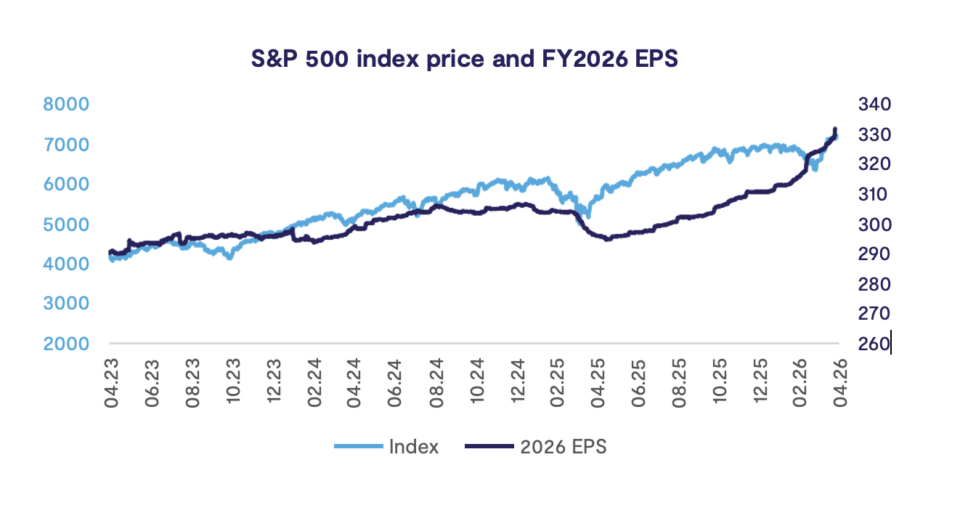
Second, the US first-quarter earnings season has been notably robust, with aggregate earnings growth of approximately 30% (so far) and widespread positive surprises. Performance has been led by technology and by the Magnificent 7. Importantly, hyperscalers’ results and continued capital expenditure commitments have reassured investors regarding the sustainability of AI-driven demand. For investors seeking exposure to these leading franchises and superior earnings momentum, the US market remains the primary destination. Notably, full-year 2026 index-level earnings expectations have been revised upwards since the onset of the conflict, bringing valuation multiples down from previously elevated levels (chart).

Third, while structural concerns surrounding the US dollar remain valid, near-term dynamics appear more supportive. Resilient US growth, expectations of relatively stable policy rates, and the strength of corporate earnings underpin demand for the dollar. Although foreign policy rates may rise more rapidly, subdued inflation in the US should sustain relatively higher real rates. Over the longer term, however, the dollar may face renewed headwinds, partly as a consequence of the current geopolitical environment.

In light of these developments, our investment committee has reassessed its regional equity allocation. While the preference for international equities remains in place, it has been moderated.

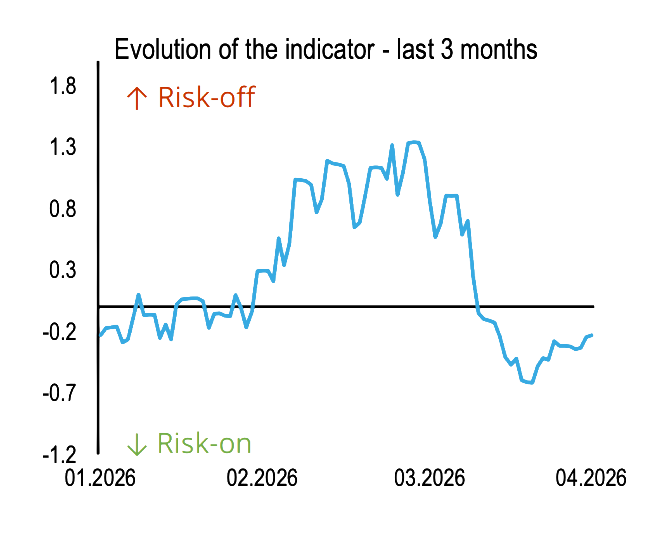
Risk Indicator

The Bluebox risk indicator followed the rise in sentiment observed across equity markets and went back to risk on levels, before adjusting towards a more neutral reading. It shows that markets are not much concerned by the situation in the Middle East, or that positive factors are fully compensating for the negative ones. The current reading indicates a normal risk level for portfolios.

The BlueBox Global Risk Indicator summarizes 20 market variables such as implied volatilities, implied correlations, or credit spreads into a normalized index. A positive number indicates a higher-than-average risk level, i.e. market stress. Low levels are indicators of normally behaving markets, while strongly negative readings (<-1) correspond to market complacency. The indicator is global and can be compared to a speedometer of financial markets. Please contact us for further information. 

May 2026

May marked the comeback of the 2025 return drivers.

Oil prices eased during the month on hopes of a diplomatic breakthrough.

Read article

March 2026

March has been a challenging month

Most asset classes declined, with the exceptions of energy prices and the US dollar.

Read article

August 2026

Interest rates back in focus as markets reach new highs

August saw strong equity gains, supported by resilient earnings and stable inflation, while rising oil prices, geopolitical tensions and higher long-term interest rates introduced new risks.

Read article