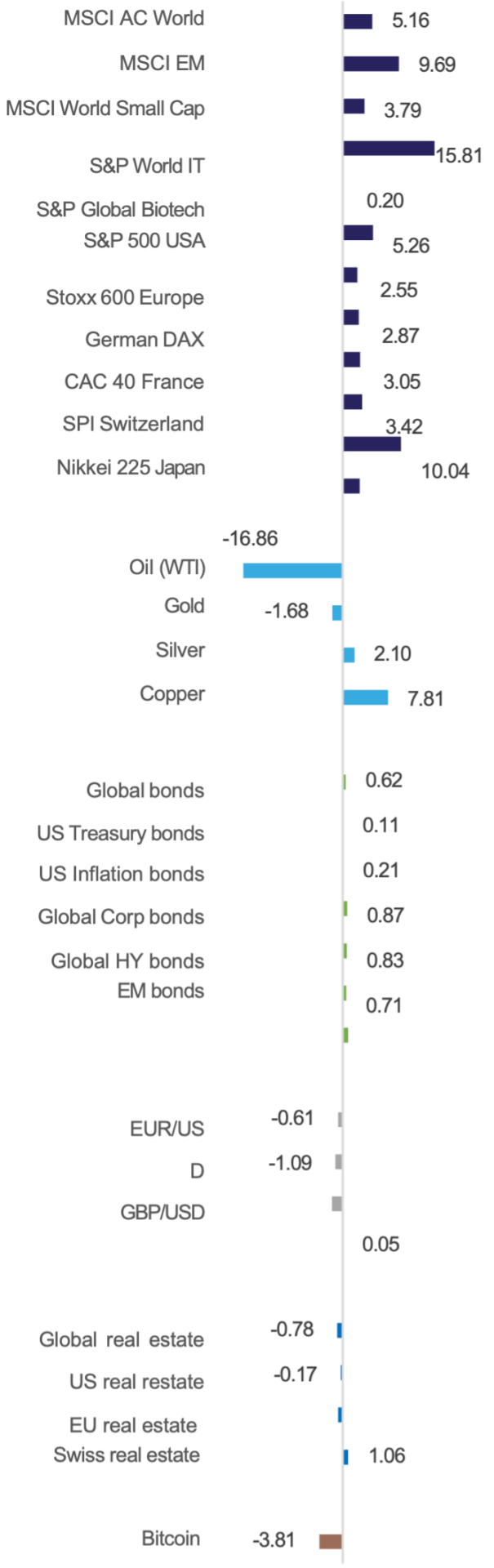



May marked the comeback of the 2025 return drivers. Technology equities led the
rebound, posting a 15.8% gain for the month, powered primarily by semiconductors (+25.5%). Growth and cyclicals rallied alongside an all‑encompassing AI theme that is currently the dominant market narrative, while bonds lagged amid accelerating inflation and volatile long‑term yields.
After subdued performance since Q4 2025, technology — and semiconductors in particular — began to outperform from early April and saw renewed demand in May. AI is the primary catalyst, drawing investor capital to companies with direct or cascading AI revenue exposure. The Philadelphia Semiconductor Index (SOX) is up 81% year‑to‑date, its strongest start to a year since 1999. Software names that were previously viewed as potential AI losers — a position we contested — participated in the late‑month rally and finished May up c.20%, though they remain negative on the year.
The rapid breadth and speed of the rally have revived concerns about financial excess
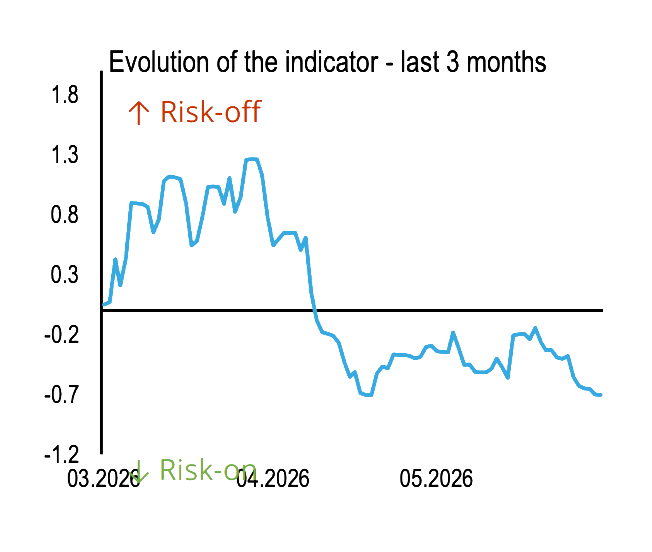
given the macroeconomic and geopolitical backdrop. Valuation multiples have expanded quickly in a melt‑up pattern that resembles a FOMO (Fear Of Missing Out) dynamic. We are surprised that the majority of market participants dismiss the potential impact of an unprecedented energy disruption from the Strait of Hormuz closure. With the VIX low at 15.3% and our risk indicator back in negative territory, signs of complacency are becoming apparent. This does not imply an imminent correction — markets can continue to advance — but equity valuations are more vulnerable to an adverse surprise as summer approaches.
The macroeconomic backdrop remains supportive. Manufacturing PMIs are comfortably above 50 and trending higher, helped by accommodative fiscal stances and AI‑related investments. Financial conditions are loose and the solid pre‑war economic momentum appears intact, which underpins equities. The principal macro risk is accelerating inflation: the latest headline prints stand at 3.8% in the US and 3.0% in the EU. Euro‑area futures imply roughly 2.5 ECB hikes through the remainder of 2026, implying the ECB is ready to fight against the accelerating inflation. On the other hand, US futures markets show less conviction for 2026 Fed hikes, reflecting the new Fed chair Kevin Warsh position on interest rate and inflation. This policy uncertainty is contributing to bond market volatility: the US 10‑year yield peaked at 4.66% before settling near 4.43% while remaining in an uptrend. We continue to view long‑term yields as having upside risk and therefore maintain an underweight and short duration stance on bonds within multi‑asset allocations.
In sum, May’s performance was equity‑technology-driven with limited bond contribution. We recognise the risks to equities but, given the supportive macro backdrop and ongoing AI‑led flows, we remain fully invested for now.